Webinars
EVCOM Sessions: Designing A Hybrid
177 views
Panelists: Mike Harper (Firehouse), Dax Callner (Smyle), Charlotte Gentry (Pure Comms Group). Discussed facilitated by Dale Parmenter (DRPG).
Find a full list of accompanying resources here.
Part of EVCOM Sessions: The Virtual Programme
View transcript
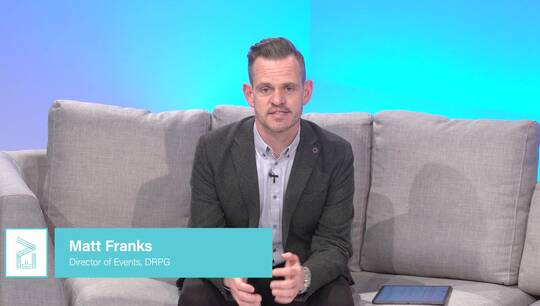
hello and welcome to this EV comm broadcast so I'm Dale Parmenter CEO of D RPG and we're coming to you from our studios here in Worcestershire now before we get going though we've got a couple of commercials firstly to tell you about the virtual carrion Awards which is next week tickets for sale on the overcome website it's a great deal fifty-five pounds for ten logins there we go plus there's other price points for freelancers members and non-members I say the event takes place on the 16th of July and please be registered by n to play on the 14th and also the F come industry live and Film Awards we've got an extended deadline for entries which is till Monday the 13th of July so get those entries in so on to the content and designing a hybrid I'm joined virtually on the sofa by Charlotte Gentry who's the founder and CEO of pure comms Group Dax calendar strategy director of smile and Mike Harper managing director of fire house so during the broadcast if you've got any questions please type them in to the portal and I'll be picking them up here on the on the iPad so we've got 70 people online already great so we've seen a huge growth in virtual events over the last few months and even from these studios we've produced over a hundred and forty programs going out so as face-to-face events come back online will we see a shift to hybrid in that meantime but first what is a hybrid event and and I'm I'm gonna ask all the panel that question in a second I'm gonna start with you Mike you produce many hybrid events particularly in that internal comms world what does hybrid mean to you thanks Dale well a hybrid simply I think is an event that integrates both live and virtual elements simultaneously you know where participants aren't bound by physical or geographical limitations I do think hybrid is a bit of a current buzz word that is catch-all for a number of ways of communicating that previously existed but are now going through a rapid evolution you know to me the new comms challenges were experiencing but as you well know live events producers are very resourceful they're very adaptable and agile and I think we're now starting to meet you know this demand this new demand you know my experience from an internal comms perspective is that at one end of the spectrum you know traditionally a hybrid would involve a broadcast hard with a live audience and then a series of other remote locations which are often in different countries also with live audiences that are all connected together two-way via the internet or back in the day would have been satellite and at the other end it could be something as simple as single location broadcasts with an opportunity for people to interact online with each other and with guests at the location and I think the real-time two-way connection is the differentiator it's not a broadcast it's not passive the content and the way it's delivered has got to be engaging of course but it's about creating dialogue conversation and encouraging involvement and participation you know whatever those methods might be Charlotte watch how would you describe it what's it for you thanks Dale I'm not sure that I can necessarily add a huge amount to and what mike has just described it as it's set I think in the current market conditions because we may well when we come out the other side of this it may well have changed what we what we see we perceive this to be but currently to us it means a live event potentially with reduced numbers of Delegates with the content and experience being streamed in a format in one format or another to a wider audience where those individuals don't need to be present in in the in the venue or are simply experiencing it from a remote location thanks that's what's your experience of hybrid I mean my only disagreement would be with the word streamed out to virtual because I think they if it's an event they have to he has to be more than a stream of content but essentially straightforward definition a live experience with physical attendees and digital attendees and staying with you Dex so we're seeing lots of restrictions on travel we assume that's going to continue on for the foreseeable future but also the talk around climate change or sustainability you know is it going to be ethical to put thousands and thousands of people on planes and fly them into one location is the global big conventions conferences do we see that landscape changing using the technology now to have more regional events what's your take off yeah this is a complicated question I think first of all it may be over for really large-scale conventions that we've seen in the past at least for us years to come and I don't think it's just government restrictions and by the way government restrictions will vary greatly based on where people are in the world it's going to be very different in the US versus the UK or Brazil which is a mess right now as well so we're not going to see that kind of global audiences coming together at a single location I would say for years to come but even beyond governmental restrictions is the mindset around this are people going to want to congregate in enormous numbers are they going to want to get on a plane and go somewhere where there's that lingering fear even if we get past the pandemic that could potentially affect our industry for years to come so I think we have to consider hybrid as a model a long-term model even if in what physical events do start to return absolutely absolutely you're right and in Charlotte so ok we get a briefing and the event lends itself all requires a hybrid element where do you start I think you have to start very much with looking at the objectives of what it is you're trying to achieve and that would apply just by producing a live event on it but now more than ever I think there has also been such a now not a knee-jerk reaction but there is such a reaction to just putting everything online I think the one now needs more than ever to look at the look at the events piece as being part of a much bigger integrated communications campaign people can't I think they need to communicate is bigger than ever right now and so one is to look at what that mode of communication needs to be and it may be that producing a hybrid event is actually not right necessarily for the objective that you have around this particular piece of communication and so looking at the comms piece and saying okay let's look at what it is we actually need to achieve that maybe through a distribution of material it may be through a distribution of content in some realm or another which obviously a lot of that content could be produced as part of an event anyway and I think one needs to look at it in much broader terms now yeah absolutely and Mike you you you produce these events I've seen some of the stuff you've done what what sort of what's in your mindset when you're talking with a client to say hey this really lends itself now to joining up several locations in a two-way engaging process what where do you start with all of that well I think you know as Charlotte said it's it's just clarifying that brief you know why do you want to bring a virtue element what's its relevance and you know what's going to be the scope in terms of the number of locations and and interactivity and you know the development of content and virtual have to go hand-in-hand so it's all about captivating people and keeping them energized through this you know through their experience I think we've just got to be careful because you know there could be this inevitable fatigue of seeing this procession of Talking Heads so it's you know what can you do with other techniques now you know augmented reality gamification all that great live interaction you know not about using gimmicks but it's about audiences remembering what you've said because you've created a memorable experience for them and I think you just have to go through and ensure you go through a due diligence process and I'm sure everybody understands that you know as as with anything that's connected with a live element the devil in the detail is you know is vital so checking and testing any location that's going to be virtually connected you know inevitably standalone venues conference halls hotels cinema chains they're all going to be looking for a piece of the action you know to position themselves in the hybrid market and you know you just have to go through that due diligence just to make sure that you know they've got the right digital infrastructure you know they've got a managed connectivity you know it's dedicated we know with high speed stable IP distribution so you know you could you're gonna be sending large amounts of data about some forwards like vision and video I think also there's gonna be a responsibility for them to ensure you know that their businesses feel safe and they're not compromised you know what is gonna be their you know their protocol now in this in this new norm so I think it's you know that due diligence that's preparing yourself is absolutely he's actually vital right and I think you picked up on a point there around augmented reality and engagement and we talked about experiences in a second we we we've done event for many years for half thousand people across the globe it's a global organization just 50 people in the main hub in London and then we got others in in Africa may have 400 in the states may have 300 maybe just one person sat in hong kong in in in bed with their laptop so it's creating you're right creating that experience so everybody whether they're in the room or whether they're online whether they're with a group of people or whether they're just on their own he's getting that that one and i are is actually a good a good place to start and we we did an AR piece with with this client where the CEO back in london was in an AR environment and then we were projecting that out so everybody's getting the same experience but we're also there we're receiving information back in as well which is is adding to that wealth of of engagement and tax on that how what other tips can you give to to create that experience are we getting that that same experience whether they're online or in the room well actually don't think it should be the same experience necessarily first of all I'll say I believe in events and I think we are event marketing professionals for a reason because we understand its power and its power lies not just in the consumption of content it's not just people sitting in front of a plenary speaker you know absorbing what that person is saying there are there are the things that make an event good that I think we need to bring into the digital sphere for the virtual part of the hybrid model mix however I think that the experience of the physical attendee and the experience of the digital attendee can be different but they both have to be good I think that's the hard part of what event marketers need to consider and bring their creativity to when it comes to virtual and hybrid events so for example one of the reasons people go to events is to meet their peers and talk shop with people like them but they wouldn't have access to otherwise that works very organically in a physical environment you can set up like birds of a feather and networking sessions and those sorts of things but people generally will talk to one another within the digital setting people still want to have that human connection and meet and talk to other people like them but you have to call on different tools and functionality to make that a good experience is it an artificial intelligence system that connects people up through matchmaking so that they can have a conversation with someone who has a shared interest so it's a different experience in the physical and the digital but it meets that same need which is to interact with other human beings I think those are the sorts of things we all need to be thinking about for hybrid and then sorry to say one last thing the tricky thing that is where do those overlap so then go bingo back to network how does the physical event attendee network with the digital event attendee that's where it gets really interesting and where the hybrid model I think can be very successful absolutely we've got something similar to that tomorrow evening with a it's a fun event it's an award ceremony where we've got physical people well they're all physical people clearly hosting tables of virtual ten ten people on a table for dinner and that's gonna be interesting how that works and then everybody's going to come in to the auditorium for the award ceremony so we're all trying out this new technology where can we use technology and digital technology may be separate up so we're jewel screening as well there's a lots and lots of stuff out there that we can really work with and I think we were talking earlier around production values I was talking about TV shows and heard actually were talking about events and actually I think we were talking about the same thing I think we've got to combine the expertise of the video production world and the broadcast world with the expertise of the event world do you agree with that or Mike do you agree with that yes yes I do and I think this there's you know we know we are changed forever now I think you know because of our collective experience of the last few months you know and people are becoming you know much more fluent in virtual technology you know by by by necessity but I think we have just to take into account when we're planning this now you know how people absorb media how people take onboard in how they watch how they like to watch things in in bite-sized chunks and I think you know we might have to adapt our event you know our hybrids to to reflect that and I'd but there's one other thing I want to pick up on which is about this where we talked about the fact that you know travel is is gonna be reduced people are you know if you know to reduce carbon emissions and all those all those types of good things you know we've been doing these these what we would called link-ups for you know for many years where you have these local audiences and they haven't traveled for a specific reasons you know ie because you know they you know saving money on travel and accommodation it's it's mitigating the time that people have out the business for instance but you know it's this idea about how do you take those elements of the face-to-face experience and put it into this into this kind of multi venue hybrid activity and the idea really is is that you know you you're having a whole series of local conferences and they may be it may be about your specific market and then you reason you might join them together he said a you know if it's a company with a global reach and they've got a new vision or they might have a you know might be embarking on a dynamic transformation and they want to ensure that that entire community of professionals ishmael number their thousands your understand and share in that process of evolution there's something really unique about these multi venue hybrid events is that there are a moment in time you know it's a way of kind of unifying this whole group of people across different countries different cultures different languages and you connect them and you energize them across your business network it's a shared experience and i think you know it's taking the essence of face to face but combining it in a virtual space but still retaining that emotional connection so charlotte i'm sure we're going to have quite a lot of event professionals who have only produced real events watching now what would advice would you give to those people who have to upskill themselves so they can create and design a hybrid and what skills do you think you need to hone to create a brilliant hybrid event well I spoke Dale will probably quite a good example of this because we actually repositioned ourselves as more of an integrated communications agency at the back end of last year obviously not knowing that this was coming around the corner but I think it's a little I think it's a little disingenuous for all agency personnel to say that they are I'm now specialists at delivering hybrid stroke online virtual events because at the end of the day it's a massive learning curve for a lot of people and agencies haven't been stacked full of digital and technical specialists unless you are a much bigger agency and you've dedicated an entire team to this so my personal advice is really doing a significant amount of research which is what we have done as a small to medium-sized agency and really looked at what platforms are the best platforms for the particular scenario we have created very unique creative design around the the event experience whether online or incorporating an element of live the future so that actually there's a whole theme and there's a whole story board and all storytelling element to to this experience so I think the creative part of this is still very very fundamental to the success and so the design elements very very important but really we've become more embedded in the event consultancy basis for our client base and we have project we have project manager you online events already and we've produced them for a number of our clients and actually we've got one on Friday for 700 people it's a festival that we were meant to be producing this weekend up in Norfolk and as a result we can't because it was meant to be for 1200 actually with 600 luxury bail tents and I'm headline music acts etc and instead we're having to do a portion of it online and so we've had to adapt very very quickly in which to do that part bringing on board and collaborating with the best specialists to help us to deliver that and we are very transparent with our client base about it and our suppliers are not all based in the UK there are some based in Europe but we've really looked into who we believe the best the best are in the marketplace and being as transparent as possible and looking at bringing onboard individuals that can help us to deliver those service offerings is really what I think a lot of people will have to do okay great anything that's mark would you like to add into that if I can just add a couple of thoughts first of all we're all digital experts we are all just about I imagine living fully ensconced in digital into our lives and so I would say to you guys think about what makes digital experiences effective look at your phone what really works look at your you know streaming media account what makes that a good experience look at what shopping on Amazon is like and why that's a decent experience consider take lessons from what's happening in online gaming I mean there's loads of digital stuff going on that we all are experiencing that we can use our creativity and consider how do we bring them into a virtual setting otherwise I completely agree I don't think we should as event people necessarily profess to be technology experts there are loads of Technology experts out there and there's constant innovation it's impossible unless that's what your life is dedicated to to understand everything going on at technology so find the people who you can ping ideas off of who are the technologists and you bring your creativity and say here's what I think we should do does this can we make us work and then let them think about the technologies to enable it rather than starting with what are the technologies and how do we create an event out of the technology be creative and actually on that we've got a question in from Andy a PRG what is the role of online platforms and how can traditional events companies work best with them you want to pick that one up existing online platforms so so for instance we're talking about Skype or zoom or anything like that is that the question choose your platform maybe jeans there's a million of them yeah I mean there is I mean that though there is so many we developed our own so this is something fellas put together ourselves because we just couldn't find one that did what we wanted to do and there are loads I tend to look at the platforms as the venue so selecting your platform the how you would select a venue so if you're having a small meeting a board meeting okay you'd have teams or zoom if you're having a slightly larger meeting a leadership meeting maybe for a hundred people maybe you go down something like webinarjam or whatever and then you're going for the big the thousands and thousands of Delegates what would you choose then so I think you've got to be really careful that you try and choose the right platform and it's easier said than done for the right meeting in the same way as you would choose a venue that that would be my answer on that one let's go on to Charlotte let's talk about monetizing virtual and hybrid what are the vent what are the venue am venue I've got venues on the head now well the revenue streams and one of the implications say for sponsorship I think that you know if we're looking at online events in a similar capacity to the way in which we did we would be delivering monetization of a live event I don't think they can be looked at entirely differently there are there are similarities there obviously there are there are also huge differences but there are similarities there I think that it's people are very prepared to pay for a delegate rate to attend online events assuming and understanding the content is absolutely the adding value to the audience and that it is highly interactive enormously engaging and that people are going to take away something really valuable from that experience so I think one revenue stream obviously is delegate participation the other revenue stream especially with larger events and exhibitions and client consumer product launches those types of events and sponsorship is obviously usually a large part of those online sponsorship is still very significant and there is a very specific route to market for that I think one way of looking at sponsorship is perhaps more at as looking at is if they are online adverts so having an advert before the actual event takes place and so that it's running prior to the to the event actually starting having that advert running during refreshment breaks and and also it's obviously sponsorship is about brand association at the end of the day so it's about delivering that content online in the right in the right way so that's definitely sponsorship is definitely something that is very very achievable in an online forum but it just needs to be considered with the right format and how it's delivered I think you Ryan I think certainly at the start of virtual a few months ago where we were doing sponsored event sponsor we're like well we're pulling out we're not getting the same as being at the actual event but now it's turned into actually we're getting more coverage because we're tending to get more delegates online then what would have been at the event there's more opportunities you say Charlotte for digital marketing ad breaks banners and also breakouts in conversations smaller conversations and campfires with those sponsors so actually it opens up a whole group of possibilities for more sponsorship going forward I've got another question here from anonymous what elements of your communication strategy best lend themselves to the hybrid model so what type of client situation might benefit the most anybody want to pick that up well I think you know you know launching a new strategy or a new vision or you know where there are companies undergoing some any sort of transformation program I think I'm wanting to communicate that as a as a clear and consistent message across Network professionals is you know is a is a key way of using you know a hybrid hybrid event you know and energizing people making sure that that messages is clear and that you know when it comes for people for whoever is the audience having to share it down with their community that they're absolutely crystal clear so Charlotte major advantage of communications within this particular realm that we're talking about now is that the content can be clipped down and and the longevity of it and the evolvement of that content it can go on and on and on which obviously when you go to a live event yes there are campaigns pre during and post the event but in this instance there's so much content that's being farmed out now in the online realm that you know once able to really maximize on that from a Content perspective and elongates for much longer potentially absolutely and I think one thing I've noticed is the speed these things can be turned around where you know we put an event on a company conference or sales conference we may take six months to put it together if the CEO wants to change strategy and communicate that strategy we can do that in a matter of days whether it's hybrid as well if you're just going to do it in their head office also I think the analytics and the data we can get back is much more powerful than in some cases that we can get on the floor on the ground at an event and certainly the analytics we've seen of what they're watching how they've interacted what questions they've asked and and how we've responded as well anything on you want to add on that - yeah particularly on the question of data and measurement because it is quite interesting you can get loads of data out of these virtual events the question is what does the data mean and I think sometimes we get romanced via data so we might say well we have this many people and they stayed for this long and they engaged in these activities and they've viewed this content the challenge is as with a physical event how do you then turn that into meaningful insight about whether the event delivered on objectives and I go back to same old tools that I use for physical events surveying asking people observation to really then connect the dots between what we're seeing and people are doing and the actual impact on goals and objectives so I just would say it's a it's a word of caution you know be a little bit careful not to get overly romanced by the data the data is great it's interesting you can help you approve moving forward but it doesn't always tell you the deeper level of did this actually do what we wanted it to do absolutely not I totally agree with that because you need to send set clear benchmarks and objectives that we can measure against and for me it's always what did the audience do differently after they've been to the live event been to an exhibition or they watched a virtual event what did they do differently and if they did nothing differently no behavior change then then you really wasted your money in investing in that okay let's just take a look for another question no I'm just going to talk about the future of hybrid and Dax you talked about you you shared your vision earlier on tell us a little bit more what way you think hybrid is going well I think it's going to be really interesting to go back to a few points like for example about the revenue model and the pricing model I don't think we know yet there's not enough evidence to support like what you should charge people is you do charge something different for the virtual digital attendee versus the physical attendee for example do you charge something different for a physical sponsor versus an online sponsor these are outstanding questions I think our industry has got to sort out there is no benchmark data that we can call on to inform a point of view and I will say also the other tricky thing even about designing hybrid events is the world is so different now than it has been in the past so even like you three have we've been producing hybrid events that doesn't mean that past will inform the future I don't think any of us know what's going to happen but if we do put our prediction hat on as I said earlier I think we can assume that physical events will need to be smaller that there will be biosecurity measures for a hybrid event for the physical element where we need to make sure social distancing and hygiene and we're really being considerate of making people feel safe in the physical setting we need to then think about what is the digital experience and how is it as good as the physical experience I think that's one of the trickiest things we as an industry have to think about how is the sponsor experience in digital as good as it is when they meet with a potential I qualified lead in a physical setting and I do think we can find ways to matchmake qualified attendees and digital with the sponsors that they should be talking to and so again I think it's about creating almost like two paths like let's think about a journey right you have an audience a potential audience for a hybrid event you invite the entire audience and you allow them to choose am I going to take the digital journey or am I going to take the physical journey then because they make that choice you then separate the experiences and you allow them to have an excellent event whether they're joining us live or online and then you bring both of those constituent audiences back together or you find moments in time to bring the audiences online and off and and physical together and then everyone comes back together at the end so I think this is just such an interesting communications challenge and I think we have to consider that we want the experience to be as good for the digital attendee as it is for the physical one I think that's the challenge we have as an industry absolutely and we've got a question related to that which I've been asked many times over the last few weeks do we think virtual and now hybrid will replace face-to-face you shaking your head Charlotte I think that I think people and I think if lockdown is anything to go by I think there's a lot of people that are desperate now to get out and re-experience that face-to-face connection I think it is very hard as much as we are absolutely dedicated to producing more hybrid and virtual events and that is definitely here to stay I definitely don't think they would ever be able to replace them in their in its entirety in its entirety I think we also have to ask the question you know there are an awful lot of challenges that our clients are facing now when we've done a survey recently to try to understand what our clients challenges actually are and a lot of we have to be mindful of the fact that a lot of people who are in events teams on our departments emerging now so they're merging with marketing departments are merging with communications departments because the perception is that live events will certainly not be taking place for the foreseeable future and so it's being able to respond to the challenges that our clients are facing and support and guide and help in that respect that's of paramount importance at the moment and and looking at what is what is best to help navigate people through this this particular time and I think this time is evolving it is changing as if this time has taught us anything is literally week by week things are evolving and moving and changing and what the conversations that we were having back in April uncertainly not the conversations that we are now having in July that is the certain absolutely mike what's your take on on that question I agree I agree with Charlotte I think that you know face to face will still be here to stay it might be in a change format and I think you know in terms of the you know the hybrid experience as we start to move forward you know with you know with technology and you know we start to create emulate really I suppose you know that the live experience so you we've seen lots of examples recently of you know fantastic 3d environments where you know we're creating the experience of visiting an event virtually but with these live event live elements you know as we said before users of things like augmented reality and and you know many different types of types of interaction and I think you know as we start to move forward that will increase you know the use of virtual reality you know avatars all that type of stuff that brings that that where you start to blur I suppose the lines between live and virtual will start to come more and more to the forefront that maybe sometime in the future but I think all that type of stuff will continue but there will still be that need for you know a face to face element and you know and how do we bring some of those elements of face to face you know into the virtual world you know we chatted you know earlier about you know your your idea around you know getting people to kind of experience the you know the different foods and things like that so you know an event he's made up of lots of different elements you know there's the face to face conference there's awards there's dinners there's breakouts you know all those elements are going to be brought together it can be brought together if we can think creatively about how we can we know we can blur that line between live and and virtual absolutely and the we were talking about the food a food story I told earlier in the rehearsal we did a hybrid event for a food international food company where they wanted to have a bit of fun and with their their areas in Philadelphia in Taiwan in across Europe and we just sent the food out people cooked it and then we just had a big food tasting competition and people voting for their next product that's going to hit the hit the retail market and it was a lot of fun but it was great to get all that cultural variations and comments at one time we could have just sent it all out and said okay come back in a week but we did it all in one day and it was it was great fun and that actually the connected question from Emily here do you think the demand for digital content will still be as high once we return to than normal and I think we've covered quite a bit of that we've done some research and a head of insight and innovation Callum Callum Gill rates live events from a gauge of one to five and he said in the norm live events engagement is about 1.8 people wanting to go to live events his prediction is once we do get back to whatever normal is going to be it will go up to 5 it will spike because people as you say Charlotte will be absolutely desperate to get out there and do that face to face and then it will come back slowly back down to to the 1.8 get any any comments on that any feedback guys Dax I've been quiet for a bit okay yeah a lot for a counterpoint to my colleagues on the panel which is that digital has replaced physical fist you know human interaction I mean that's the world we're living in and it's so funny because I was just thinking the other day I feel closer to my colleagues at smile that I did before lockdown because I'm spending a lot more time in very close interaction with that it's not physically face to face but it's digitally face to face and I suspect actually that what's going to happen is there there will no longer be this boundary between a physical conversation with another person and a digital or online conversation with another person I think we are all getting much more used to how do we have an effective authentic emotionally rich conversation with people using our cameras which is new and that feels uncomfortable and awkward at first but I think because so many of us are working remotely we're getting very accustomed to it yes I want to go back and you know hug a few people uncheck if you hands and I and that would be great but I think it will be much more of an integrated approach where I have naturally fluid conversations that go back and forth between digital and physical I couldn't agree more I mean we've seen more collaboration in the last three months than before when people were all in the office and I had a call with one of our teams the most graphics teams who are really excited because they have a 10-minute fun fun session every morning catch up which they would never do in the office and they know more about each other and what they're doing now than they did them so I think you're absolutely right so does that mean Charlotte then if we're in the events world the face-to-face world we need to step up now and really make our face-to-face events really work if if we're on the tail of it of digital I'm not sure how to answer that question because I think that we've been doing a very very good job up and up until virtuals had to step up really and or the online world has really taken over my personal view is that it's very hard to maintain and build a company culture online and I still stick by that and I think that a lot of companies will struggle with that I think it's obviously one can have as many meetings as you want in it on a daily basis online through various mediums and yes obviously we can create highly engaging events online but I still think that there is it's very hard to replace that that physical connection that you have with somebody certainly from a networking perspective I'm at a live event so my personal view is I feel quite strongly that you know getting back into an office environment is key and and having that physical presence is key and so I think live events will continue to prosper but what it has done is it shaken up you know what certain companies may not have really understood or known in the in the in the virtual realm and in the online realm and it's really how it's really made a step up in that area we're running out of time so I've got a couple of questions here from a net we're a small venue we can host 2,000 people that doesn't seem like a small venue but should we consider our own virtual platform and is there recommendation a platform we could buy oh I hate to give that advice really whether they should buy their own platform any thoughts on that there's so many platforms out there why look at what's out there and develop a relationship with a good one you know I think there's there's so many options I wouldn't make that investment I would I would agree with that because I think you're gonna get different companies different organizations coming in one in different things and if you're stuck with one platform you you could get into problems there you mentioned 3d avatar event experiences blurring the lines between virtual and real taking 3d avatars out of the equation how else can we blur the lines Mike you blurred those lines quite a few times on on events taking away that 3d take away augmented reality have you done it well it's as I said it's if you're if you're trying to take a face-to-face intervention and into it to me the whole essence of you know face to face is the is the emotional connection that we've been talking about you know you know how people relate relate to each other and I think you know where it works still still think where it works best of all is where you can where you can create that shared experience so you know where we where we don't want to travel where we do want to happen you know create local events but then connect people together you know in my in my experience you know whatever kind of venue you use or whatever the you know the the network is I think you know creating that kind of moment in time of combined of unities it's a really powerful virtual experience very great well it looks like we're just about running out of time I totally agree there's lots and lots of things you can do and I think I would say to people it's not about the technology it's about creating those experiences but technology is just a tool as so is a venue so is the Avia kids and everything else that goes with it just think about it as Justin or another tool in your toolbox so thank you to Charlotte Dax Mike and everyone who's joined us today reminder next week the virtual Clarion Awards they're coming from these studios and we're gonna be doing some fun cocktail making as well so we'll be sending out some instructions on what you need for that and having a bit of fun please go to the Ewa comm site and register for the show also we have if you haven't already please enter the EV com industry awards that closing date is Monday all the details are on the outcome site so thank you for joining and goodbye [Music]